
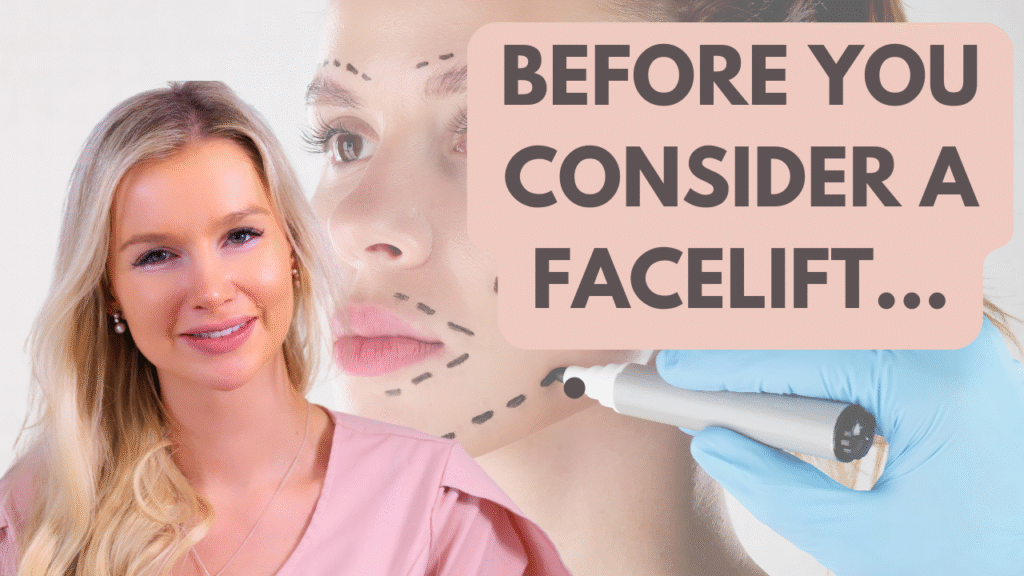
As an aesthetic doctor, I see patients every day for injectables and skin treatments. And something I often tell them — sometimes to their surprise — is that the best option isn’t another syringe, but a facelift.
I don’t perform facelifts myself, but I do help patients understand when non-surgical treatments are enough and when surgery will simply achieve a better, longer-lasting result.
In this blogpost, I’ll explain how I make that distinction, when a facelift truly makes sense, and how to maintain (or even delay) the need for one with proper skin care and collagen support.
VIDEO:
Why Facelifts Aren’t ‘Extreme’ Anymore
Facelifts are trending everywhere on social media, which creates confusion about timing. Many people still picture the overly pulled look from decades ago — but that’s not what modern facelifts are.

Today’s facelift techniques aim to restore balance, not change your face.
You should still look like yourself, simply fresher, more awake, and naturally lifted.
Aging affects every structure of the face: the skin, the fat pads, the ligaments, and even the bone. Non-surgical options can maintain harmony for many years, but eventually deeper tissues begin to descend — and that’s the moment when a facelift becomes a meaningful consideration.
The Five Pillars of Facial Aging
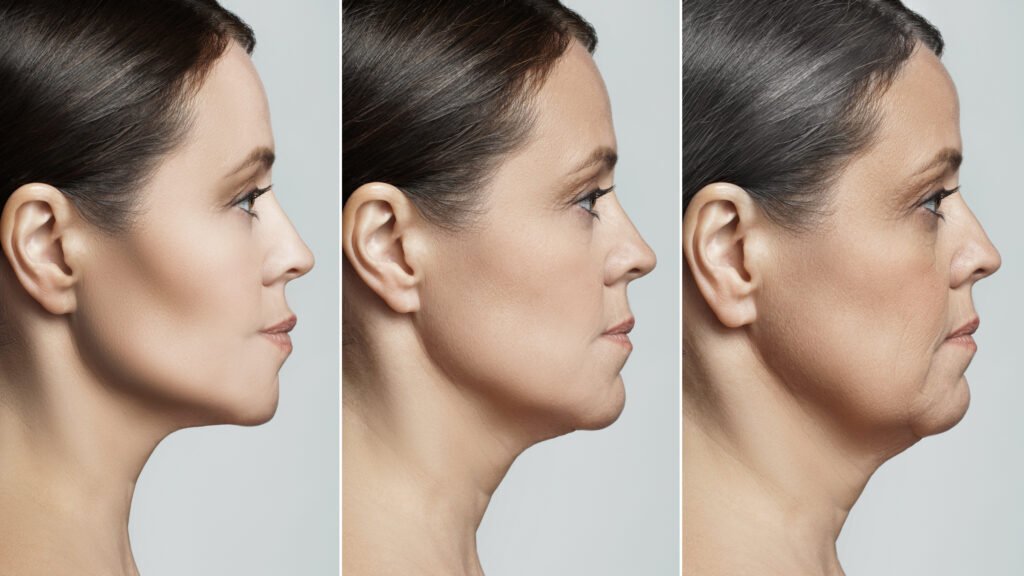
Understanding why the face changes helps you understand which treatments are helpful at which stage. The five main pillars of aging are:
- Fine lines and wrinkles
- Volume loss in fat pads and bone
- Changes in skin tone and pigmentation
- Loss of elasticity as collagen and elastin decline
- Bone resorption, reducing deep support
Together, these processes create sagging, heaviness along the jawline, and a tired look.
What a facelift treats
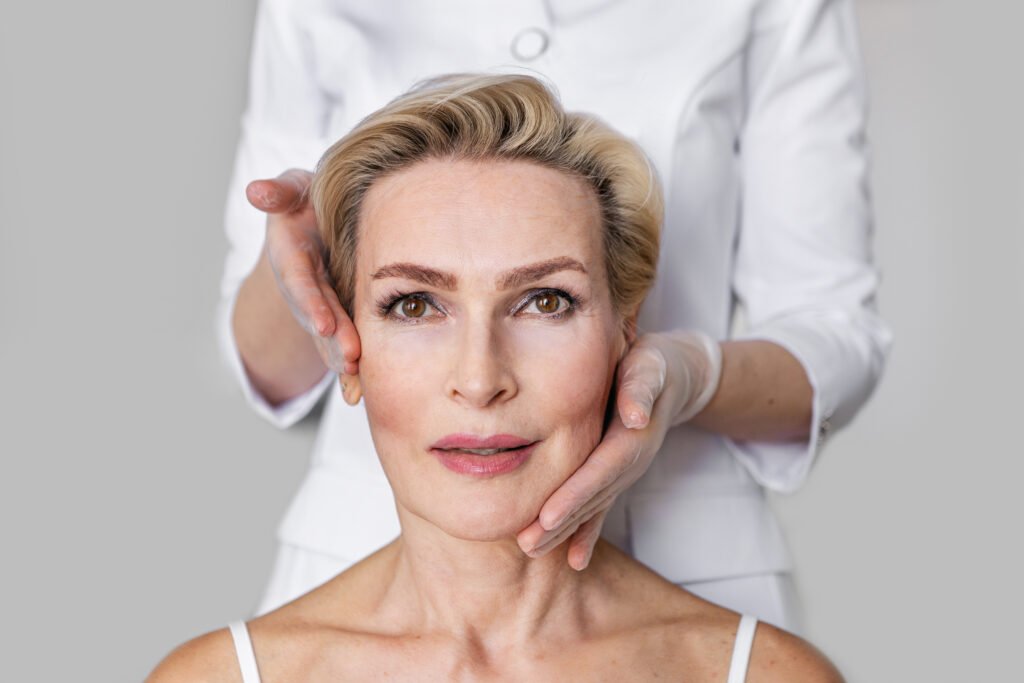
A facelift mainly addresses structural descent — the deeper layers of the face that have shifted downwards.
What it doesn’t treat
A facelift does not correct:
- expression lines (e.g., frown lines, crow’s feet)
- skin quality
- pigmentation
- surface texture
- volume loss
Those still require neuromodulators, fillers or biostimulators, and proper skincare.
When Is the Right Time for a Facelift?
There is no perfect age — only the right time for your face.
A facelift done too early can look unnecessary and may require revision sooner.
A facelift done too late can appear overly tight or dramatically different.
The ideal moment is when:
- your skin still has elasticity,
- you have a good underlying bone structure,
- but visible sagging (especially around the jawline or neck) is starting to bother you.
For many people, this sits somewhere between their late 40s and mid-60s, depending on genetics, lifestyle, and sun exposure.
Just as important as when is who.
A responsible surgeon will guide you honestly — including telling you when surgery isn’t necessary.
What a Modern Facelift Actually Does
A facelift doesn’t “pull the skin.” It repositions the deeper structural layer called the SMAS, lifting the cheeks, jawline, and neck.
Excess skin is removed only to restore smoothness — not to stretch the face.
Think of surgery as restoring the architecture of the face.
But you still need to maintain the surface with skincare.
Even after a facelift, you need sunscreen, antioxidants, collagen support, and sometimes small non-surgical touch-ups to keep the skin healthy.
Maintenance: The Key to Long-Lasting Results
The longevity of a facelift depends heavily on what you do afterwards.
Once the skin has healed, I usually recommend:
- neuromodulators to reduce downward muscle pull
- PRP or biostimulators to support collagen
- microneedling for texture
- gentle radiofrequency or ultrasound for long-term firmness
You don’t need more treatments — you need the right ones at the right time.
This is where non-surgical treatments truly shine.
Why the Eye Area Often Ages First
For many people, aging begins around the eyes.
The skin here is thin and expressive, making it the first area to lose its freshness.
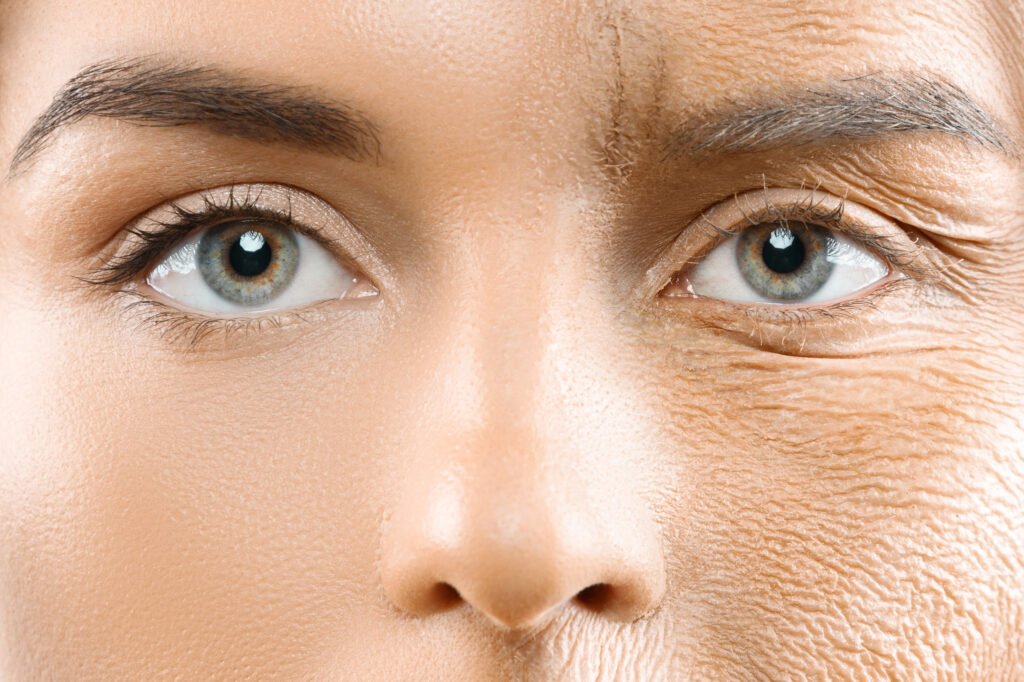
When eyelids feel heavy or puffiness becomes constant, a subtle eyelid lift (blepharoplasty) can create an open, bright look — without changing who you are.
If you’re not ready for surgery, targeted treatments can help delay it:
- polynucleotides
- PRP
- biostimulators
- gentle chemical peels
- radiofrequency microneedling
These keep the eye area smooth, hydrated, and resilient.
The Emotional Side of Rejuvenation
Something that isn’t discussed enough: even with a beautiful result, surgery can take time to emotionally adjust to.
Some people feel instantly confident, while others need a few weeks before recognizing themselves again.
The best outcomes happen when you’re emotionally ready and making the decision for you — not from comparison or pressure.
Aging Gracefully: My Doctor Contour Philosophy
Aging beautifully isn’t about fighting time — it’s about embracing your evolution.
Whether you choose non-surgical maintenance or eventually consider a facelift, the goal is the same:
To look like yourself — confident, radiant, and authentic.
There is no right or wrong choice. Only what feels aligned with your needs, your timing, and your values.

Want to Learn More About Non-Surgical Support?
If you want to explore non-surgical treatments that lift, firm, or maintain your results, you can find more information on the Doctor Contour Clinic website.
And as always:
wear your sunscreen, stay consistent, and honor the face that tells your story.